
Taste of Jamaica Farm and Herbal Garden began in 2014 on a seven-acre property. From the start, our intention was to farm the entire land and create a space where food, herbs, and culture could come together.
We began by terracing the land and putting in the basic structures needed to operate a working farm. We built animal housing, including a chicken coop and rabbit pen, along with a simple hut. As the farm grew, we moved on to larger construction. This included a main building with separate male and female restrooms, storage rooms, and living quarters for an on-site worker. We also added a large kitchen to support our tours and cooking experiences, allowing us to host visitors comfortably.
For several years, the farm operated without any major disruptions from nature. We dealt with the usual challenges of farming in Jamaica, periods of heavy rain and times of harsh drought, but we managed to push through and keep the farm productive.
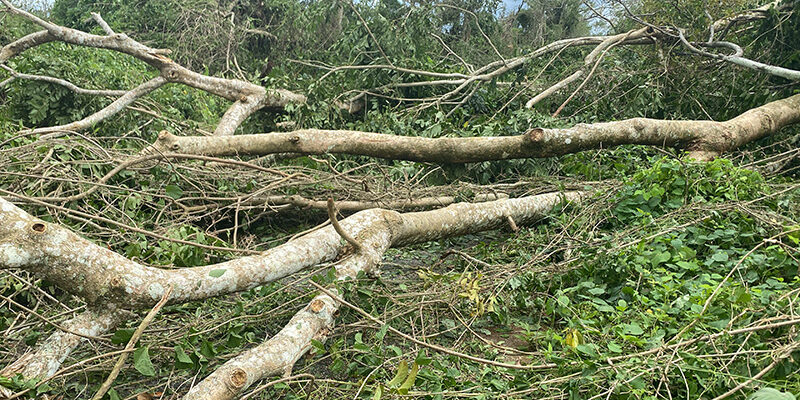
Everything changed in 2024 when Hurricane Beryl hit. The storm completely destroyed our buildings and wiped out most of our crops. Yam, banana, and plantain fields were lost, and nearly all of the herbs we had on display were killed. It took us three to four months just to regain our footing and begin rebuilding.
Then, in 2025, another powerful storm, Melissa, struck. Once again, our buildings were damaged, and the farm and herbal garden suffered severe losses. After experiencing back-to-back devastation, it became clear that continuing to farm the same way would leave us vulnerable every hurricane season.
In 2026, we made the decision to enter a new chapter of farming.
We are now transitioning to grow bags and container farming, especially for our most important and hardest-to-replace crops, including medicinal herbs and key food plants. The idea is simple but powerful. By growing in containers, we can move plants indoors or into sheltered areas when storms are approaching. This reduces the risk of total loss and saves months of recovery time that would otherwise be spent replanting and rebuilding.
Grow bags are breathable fabric containers that promote healthy root development. Unlike traditional planting in the ground, grow bags prevent roots from becoming compacted or waterlogged. Excess water drains easily, which is especially important during heavy rains. They also allow better airflow to the roots, reducing disease and encouraging stronger, more productive plants.
Container farming also gives us flexibility. Soil quality can be controlled, pests are easier to manage, and crops can be spaced and organized more efficiently. For a farm that has faced repeated storm damage, the ability to move crops quickly is a major advantage.
After doing extensive research, we have already started this journey. Our first crops grown in containers include shallots, sweet potatoes, and tomatoes. As we experiment and learn, we are discovering that even traditional root crops like yams and cocos can be successfully grown in containers.
This realization has opened a new world for us. Container farming is not widely practiced in Jamaica, especially in our part of the island, and that makes this journey even more meaningful. We are learning as we go, adapting old knowledge to new methods, and finding ways to protect our farm from the increasing impact of climate change.
Through Taste of Jamaica Farm and Herbal Garden, we will continue to document this process, sharing our experiences as we grow food and medicinal herbs in grow bags and containers. This new approach represents resilience, innovation, and a commitment to moving forward, no matter what challenges come our way.