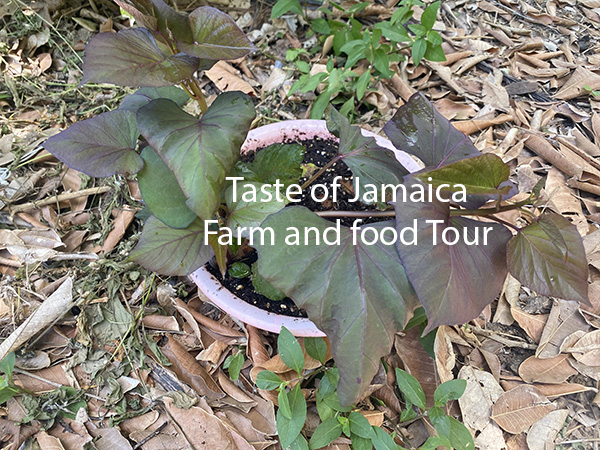
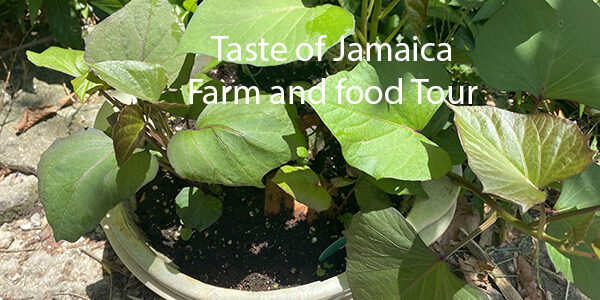
Over the years, I have tried different methods, but the one that works best for me is to take a nice large potato from the last harvest and cut it into several pieces. I then place the pieces in a container with holes at the bottom for drainage. I add some dirt, place the potato pieces inside, and cover them with soil. Keep watering, and after a week or two the potatoes will start giving sprouts. Those sprouts will grow into slips. Once the slips are large enough, I pluck them off and place them in a bottle with water so they can root. After a few days you will notice roots forming, and that is what we plant to grow sweet potatoes.
It is recommended to plant sweet potatoes in raised beds, however in Jamaica they are often planted in mound hills and allowed to run along the ground. As the vine spreads, more potatoes will grow. Farmers sometimes encourage this process by covering parts of the vine with soil and manure to help produce more potatoes.
Apart from roasting the potatoes, I personally use this staple crop as part of my diet because it is rich in fiber and helps keep you full. Sweet potatoes are widely available in the Jamaican market and are used in many ways, including the famous Jamaican sweet potato pudding. They can also be used in salads and many other dishes.
We generally have a crop of sweet potatoes ready to harvest every month. One thing I noticed during the last hurricane is that sweet potatoes were one of our safest crops because they grow underground.
One problem when growing sweet potatoes is worms. For that, I use bitter wood bark soaked overnight and spray the leaves in the morning. I also use neem oil and a few other home remedies. I often place ash around the root area to help keep away slugs. Proper watering and fertilizing are important, and when planting in mound hills you will need a good amount of mulch under the slips to keep them moist while growing.
In the end, growing sweet potatoes has become a very important part of life on our farm. It is one of those crops that continues to give back with very little waste, and almost every part of the process teaches patience and care. From gathering slips to harvesting fresh potatoes from the soil, it is always rewarding to see the crop grow successfully. Whether roasted for our guests, used in our kitchen, or turned into sweet potato pudding, this humble crop remains one of our favorite staples on the farm and a true part of Jamaican living.